masonry
How Many Bricks for a Wall in India? Measure and Order
Building a wall at home? Use its approved dimensions and door opening to estimate bricks, then check the actual brick size and supplier order.
At a glance
A wall marked 12 ft long and 10 ft high, with an 8-inch thickness specified on the drawing and a 3 × 7 ft door, contains 66 cubic ft of masonry after the opening is removed. With the illustrative brick-and-joint module used below, that works out to 891 theoretical bricks. Add an example 5% allowance for cuts and breakage, and the purchase count becomes 936 bricks.
This is a way to check an order for a wall that has already been designed. It is not a recommendation to build an 8-inch wall, use a particular bond or choose reinforcement. Those details belong to the approved drawings and specifications. The useful homeowner question is whether the number being ordered matches those drawings and the bricks the supplier will actually send.
Start at the site marking, with the drawing in hand
When the mason marks the wall on site, compare the marked length and door position with the approved drawing. A supplier who hears only “12 ft wall” cannot allow for the height, thickness or opening. For our example, the full wall face is 12 × 10 = 120 sq ft. The 3 × 7 ft door removes 21 sq ft, leaving 99 sq ft of brickwork face.
The drawing specifies an 8-inch thickness. Convert that to feet before finding the volume: 99 × 8/12 = 66 cubic ft. The door comes out before thickness is applied, so you do not order bricks for the space people will walk through.
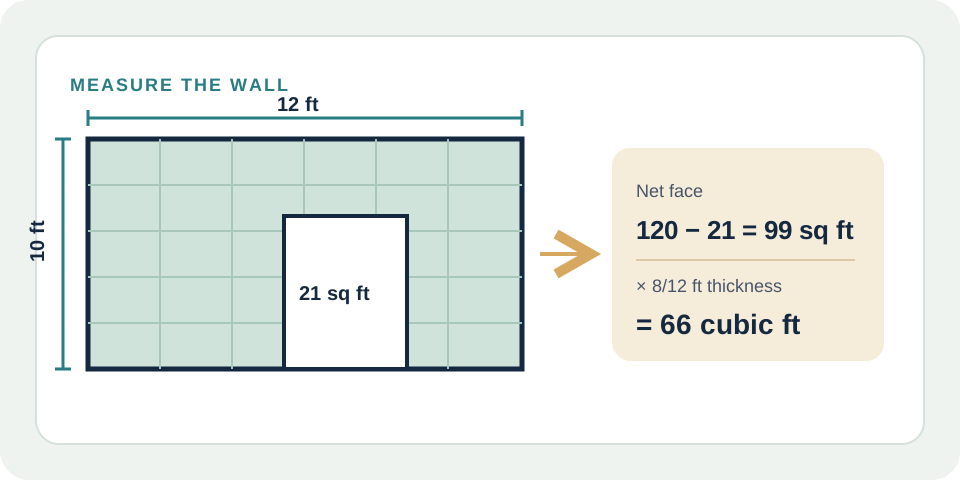
Keep a sketch with the 12 ft length, 10 ft height, door and specified thickness on the same sheet. A return at a corner, a short wall over another opening or a section with a different thickness may need its own line. If a column or beam occupies space inside the wall outline, refer to the approved detail rather than counting masonry where none will be built.
Turn wall volume into a brick count
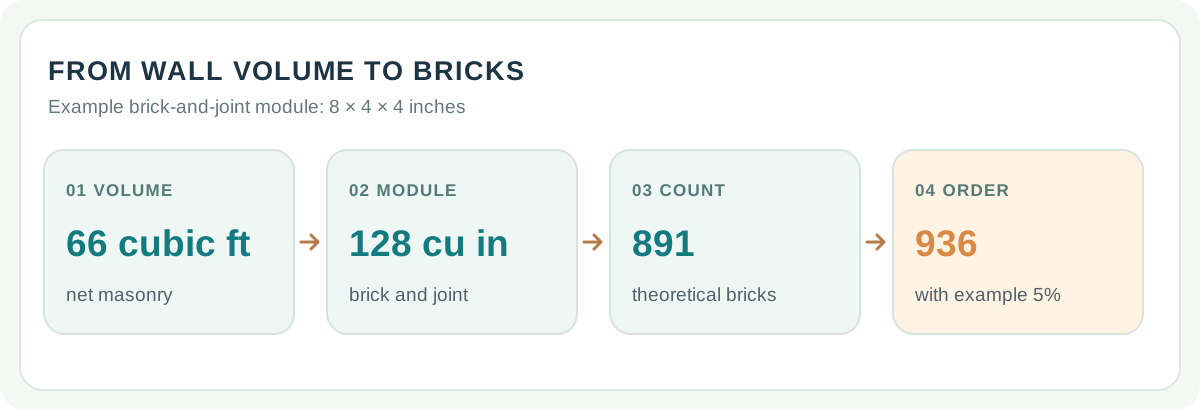
The finished wall includes mortar joints as well as bricks. For a readable example, use an effective brick-and-joint module of 8 × 4 × 4 inches. That volume is 128 cubic inches. There are 1,728 cubic inches in a cubic foot, so one module occupies about 0.07407 cubic ft. Dividing the wall's 66 cubic ft by the module gives 891 theoretical bricks.
This module is a calculation input, not a universal Indian brick size. Before using the answer, compare it with the brick dimensions the supplier quotes and the joint and laying details the mason is following. A change in brick or joint size changes the number of units even if the wall dimensions stay exactly the same.
For this worked order, allow an illustrative 5% for cuts and breakage. 891 × 1.05 = 935.55, so round up to 936 bricks. The allowance is a purchasing assumption to discuss with the mason and supplier, not a fixed site rule.
From the count to the delivery
The supplier may quote per brick, bundle or thousand. Ask for the actual number of bricks that will be delivered, the size on the order and how breakage is handled. If the delivered brick differs from the sample or quoted size, stop before assuming the 936 count is still right. The wall volume belongs to the drawing; the unit count belongs to the brick-and-joint assumption.
It also helps to keep 891 theoretical bricks, 936 planned for purchase and the quantity actually delivered as separate figures. If you later return unused units or need more, you can see whether the difference came from an opening, the product, site cuts or the allowance.
What the wall quote has to cover besides bricks
A brick count is not a finished-wall price. Mortar requires its own quantity from the specified mix and the actual masonry work. Plaster may be needed on one or both faces. Delivery, handling, masonry labour and scaffolding may sit in different parts of a contractor's quote.
Put those items beside the supplier's brick price before comparing quotations. One offer “per thousand bricks” and another “per sq ft of wall” may cover very different work. Use the rates offered for this job; a generic city price will not tell you what your contractor has included. The Brick Wall Calculator can hold the measured wall and product assumptions, while the Bricklaying Calculator and Brickwork Mortar Calculator cover related quantities.
If the opening or brick changes
Suppose a 2 × 3 ft window is added to the drawing before ordering. It removes another 6 sq ft from the brickwork face. The face falls from 99 to 93 sq ft, and at the same specified thickness the volume becomes 62 cubic ft. Under the same example module that means 837 theoretical bricks, or 879 after the same 5% allowance. The count has changed because the masonry to be built has changed.
If the supplier changes the brick instead, leave the wall measurement alone and redo the module calculation. If both drawing and brick change, redo both. Keep the revised drawing, brick specification and order together. That way the mason, supplier and homeowner are all working from the same wall rather than three versions of it.